


Building resilience through human connection
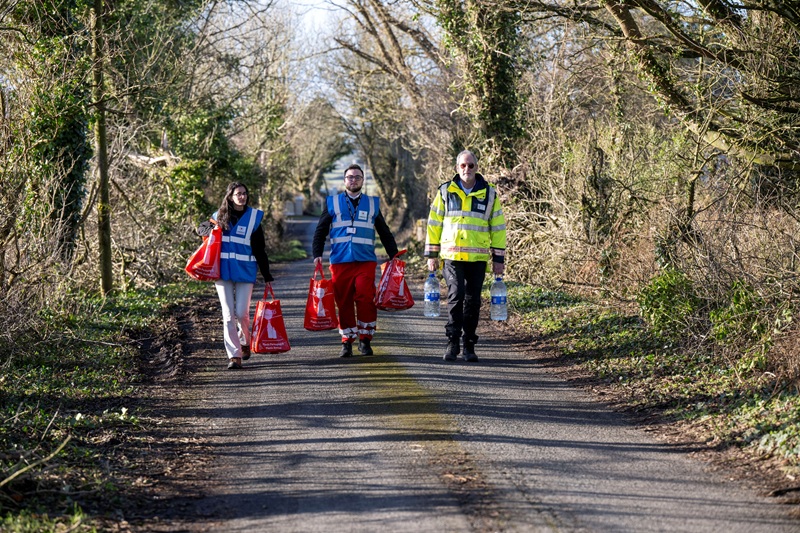
When Storm Éowyn swept across western Ireland, a group of 90 Red Cross volunteers formed an emergency response team. For two weeks, they distributed 410 welfare packs and carried out needs assessments at 76 community-based humanitarian hubs.
However, one of their most important tasks was identifying people made particularly vulnerable by the blackout and supporting them through the crisis.
“Our primary value was human connection and conversation,” says Aiden Lonergan, who serves as National Director of Community Support, a volunteer role at the Irish Red Cross.
Volunteers reached out to isolated residents, assessed immediate needs and connected people with relevant service providers where necessary. They also distributed welfare packs containing essential items such as water, milk and hygiene products.”
Emergencies are not just about damaged infrastructure. They disrupt people's daily lives, connections and sense of security. As the days pass, the consequences of disruption can deepen, especially for those who have fewer resources or support systems to rely on.
Staying connected when support systems are disrupted
Irish Red Cross volunteers visited the most remote areas to meet the “people who aren’t meeting many others,” as Brian Madden, a volunteer with the Galway branch of the Irish Red Cross, explains. “Those who live alone, those who go for days without meeting another soul.”
Loneliness and isolation among older people were recurring concerns. The Irish Red Cross reached out to charities working with older people and other at-risk communities experiencing vulnerability both nationally and locally, offering welfare checks to see how people were coping. “We knew we needed to target the homes of isolated people. In a crisis like the storm response, vulnerability is a sliding scale,” said Sharon Commins, Head of National Services, Irish Red Cross.
Volunteers help people remain connected to information, services and support. The Irish Red Cross also launched a dedicated phone helpline to support people distressed by damage to their homes, property or businesses. The helpline provided a supportive listening ear and made callers aware of relevant government and local authority support services.
Recovery happens one conversation at a time
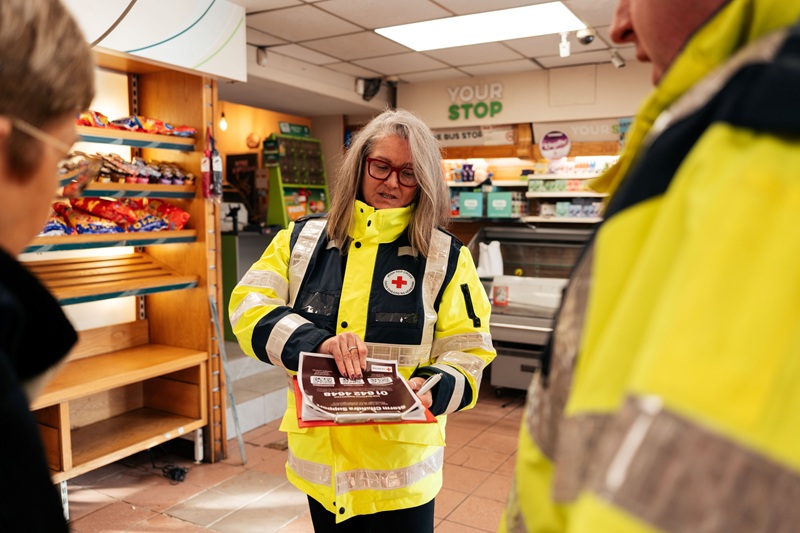
Recovery is not only about restoring services. It is also about helping people regain confidence, access support and feel less alone. Volunteers accompanied people through difficult moments by providing a listening ear, helping them navigate confusing processes and, sometimes, simply being present.
The Irish Red Cross also set up an in-person clinic that combined practical support with social connection. Small business owners and community members could get support applying for government financial assistance, such as Emergency Humanitarian Flooding Scheme. At the same time, people who visited the clinic could sit down for a chat over tea or coffee with volunteers trained in health and well-being support.
These experiences highlighted how community support networks can help people navigate disruption long after the immediate emergency has passed.
What these experiences tell us about preparedness
The experiences of recent storms and flooding are a reminder that preparedness is about people as much as plans. While emergency plans, equipment and infrastructure are essential, communities also rely on relationships, local knowledge and trust long before a crisis occurs.
Volunteers strengthen preparedness long before an emergency happens. Through training, community engagement and local networks, they help ensure people have access to information, support and trusted human connections when disruptions occur. When a crisis strikes, those existing connections make communities more resilient and their recovery faster.
The Irish Red Cross places a strong focus on continuous training and upskilling for its volunteers. The organisation also engages young people aged 4 to 25 in activities, events and humanitarian initiatives, helping build a culture of preparedness from an early age. Young volunteers play an essential role in driving change both locally in their communities and nationally.
Volunteers are not an emergency resource that appears only when disaster strikes. They are part of the community resilience that exists before, during and after crises. “Their knowledge and insight into local communities, and their training on how to engage with people at risk, are key strengths,” says Deirdre Garvey, Secretary General of the Irish Red Cross.
These experiences underline the importance of recognising and supporting volunteer networks and community-based organisations as a core component of Europe’s preparedness and resilience efforts.
